Fabricademy 3D printed fashion pioneers: ten student works
The names of 3D printed fashion are usually the studios in the magazines. But a different list was being written inside the classroom, one final project at a time: students printing dresses, bodices and armour in the years when printing on cloth was still an open question.
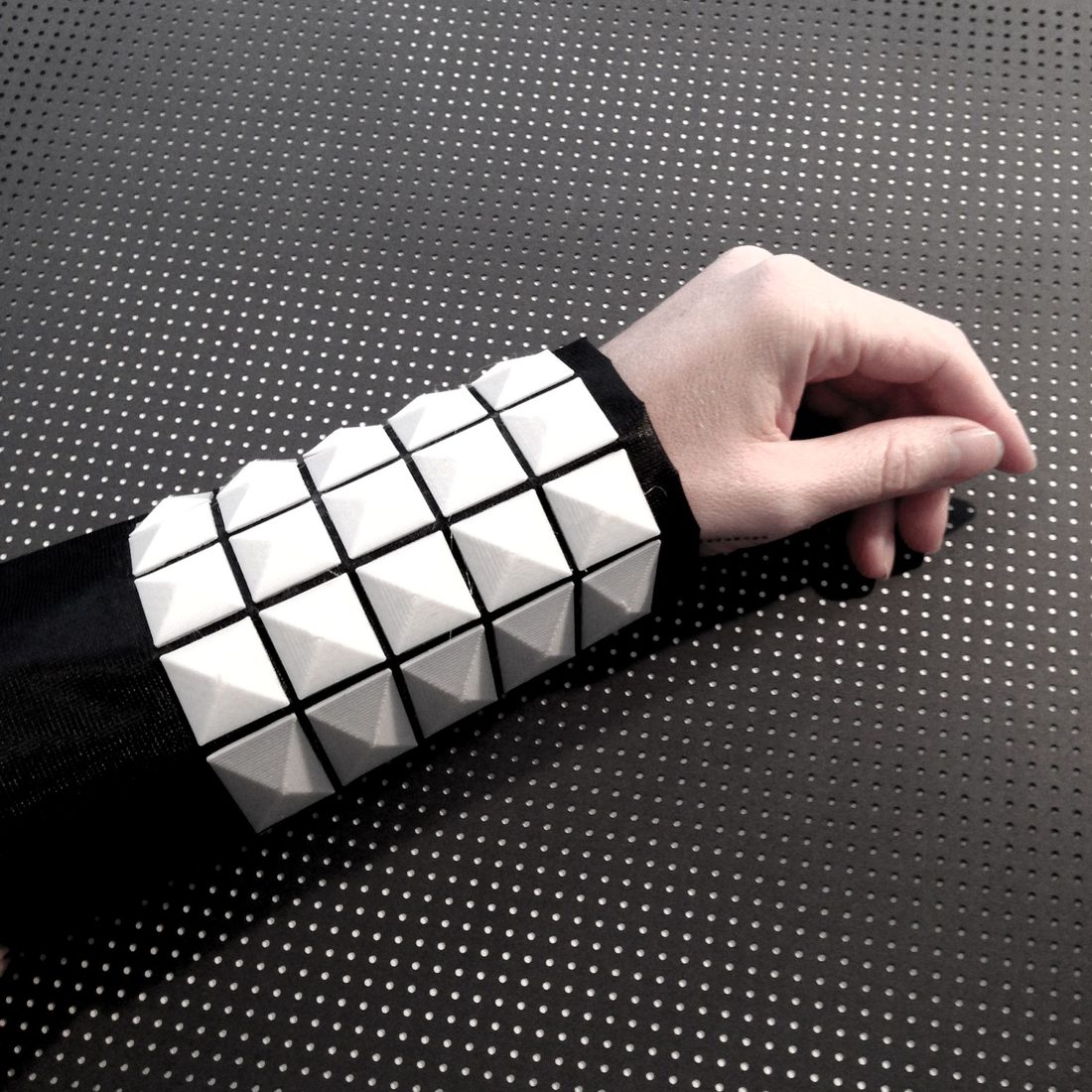
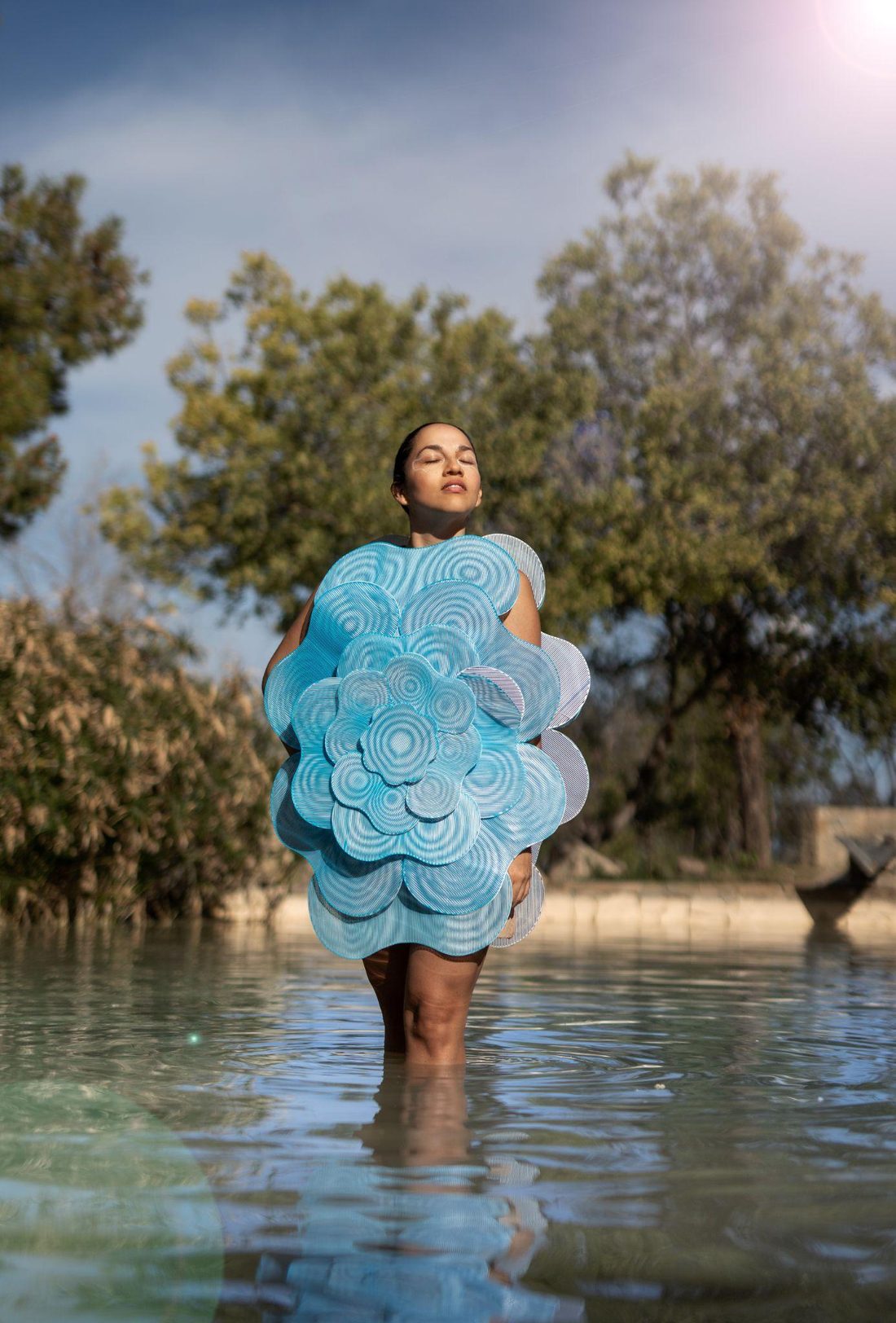
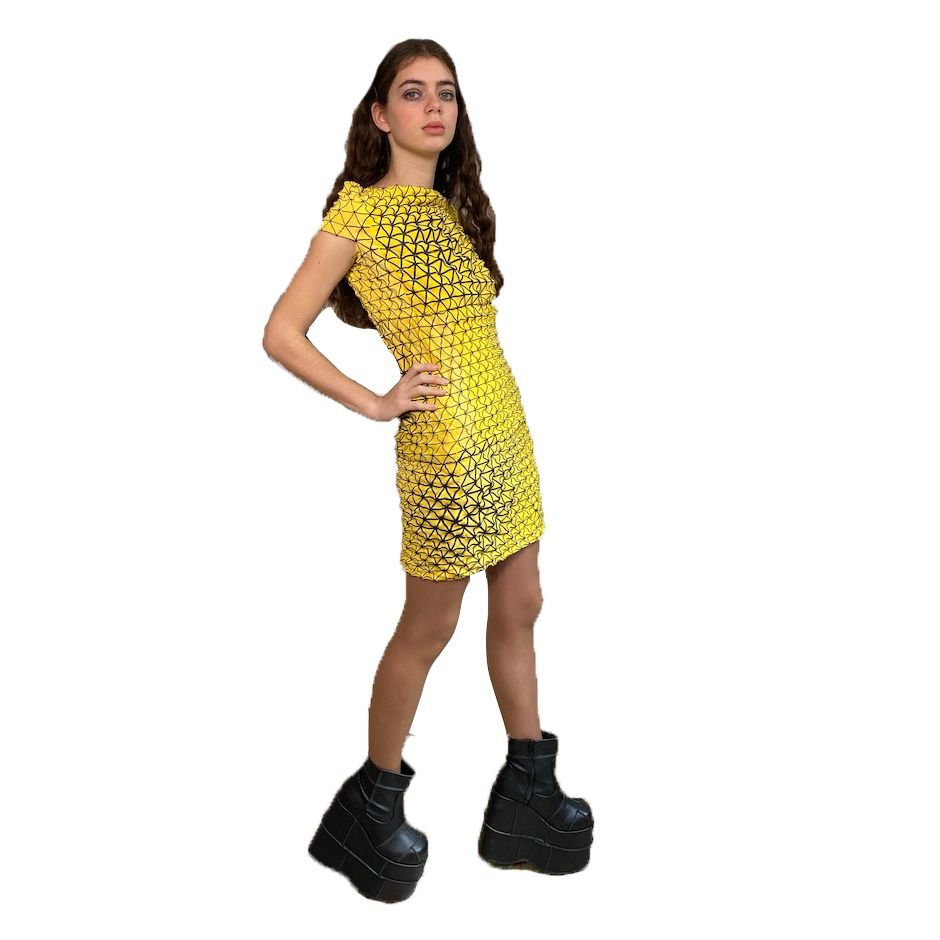
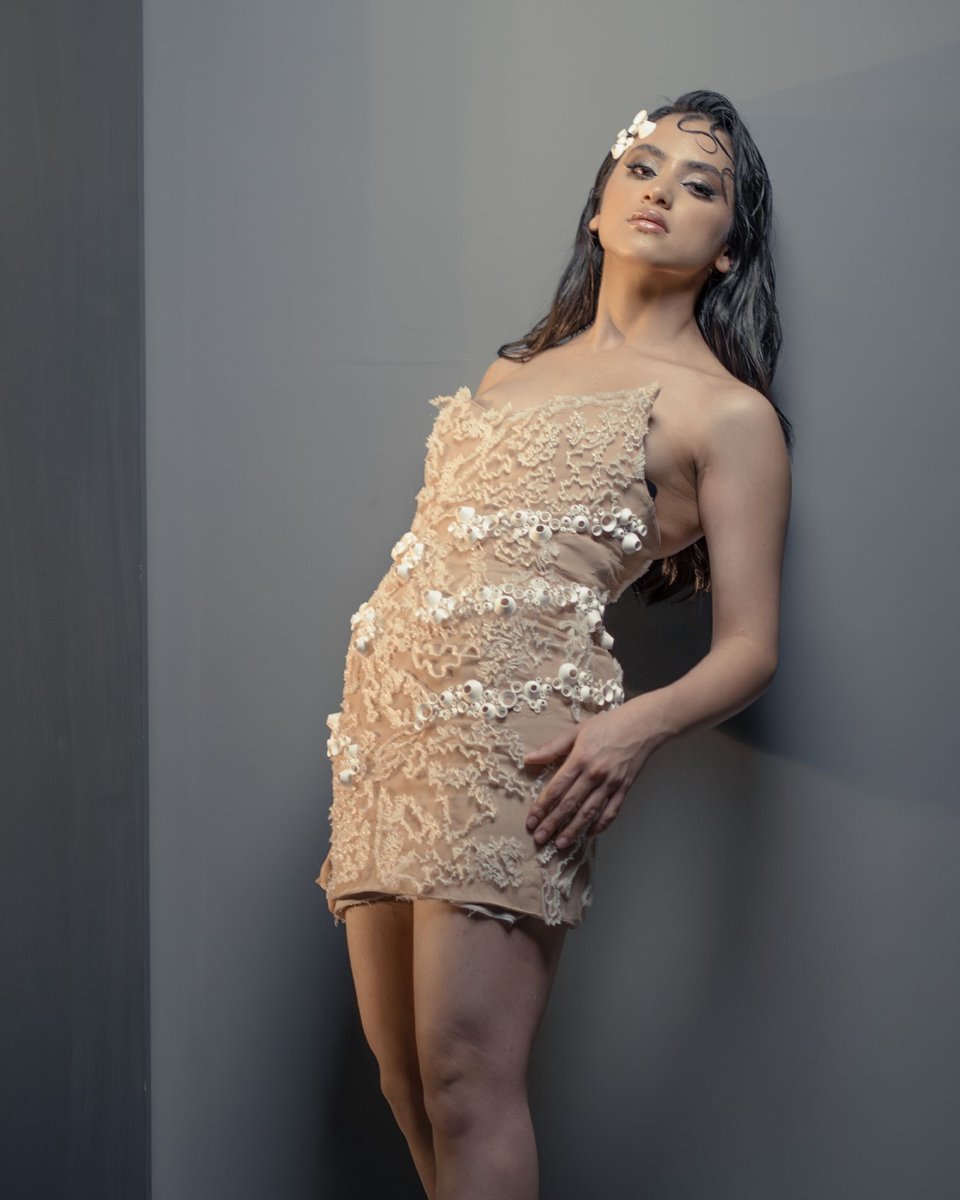
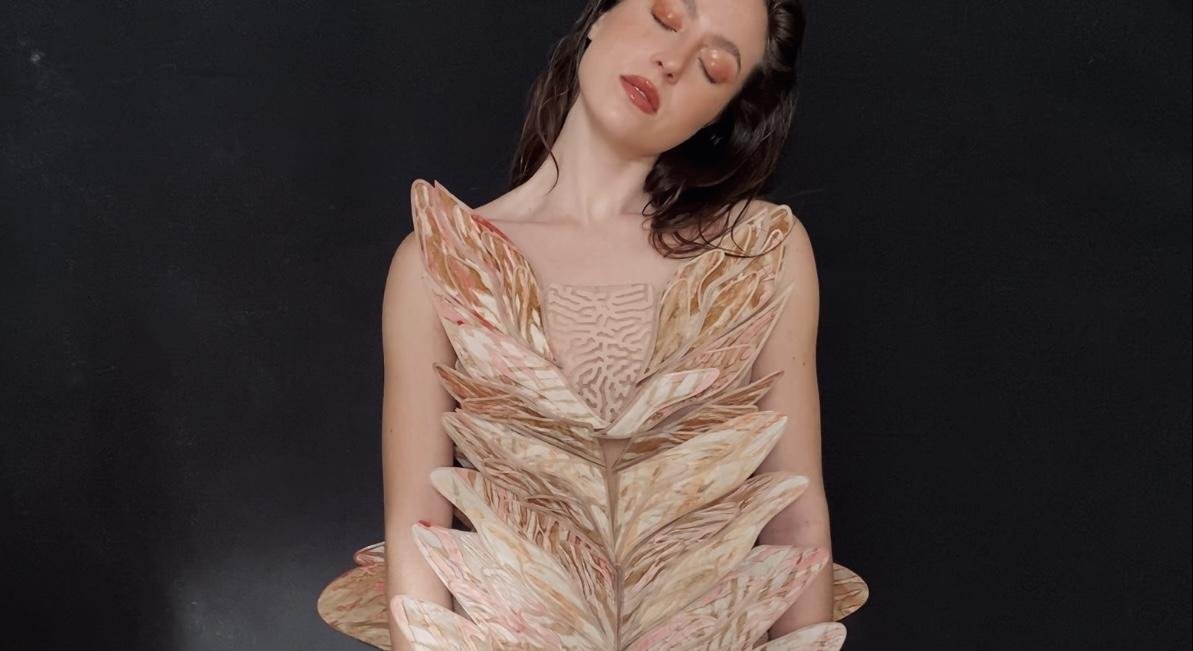
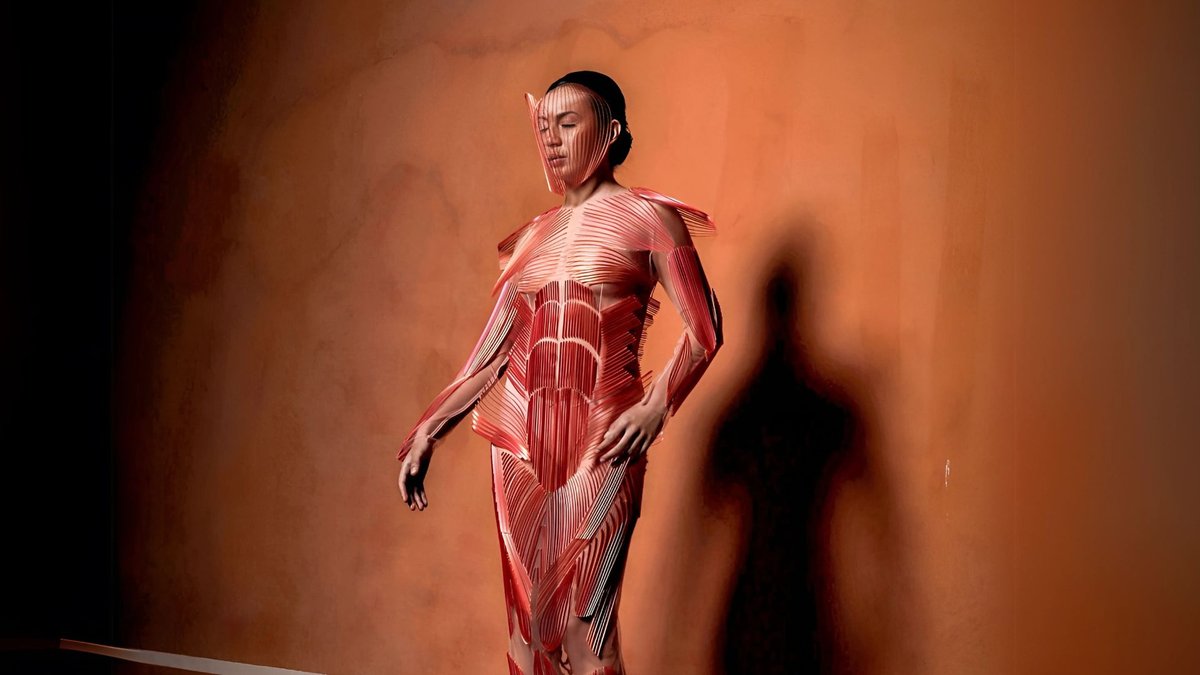
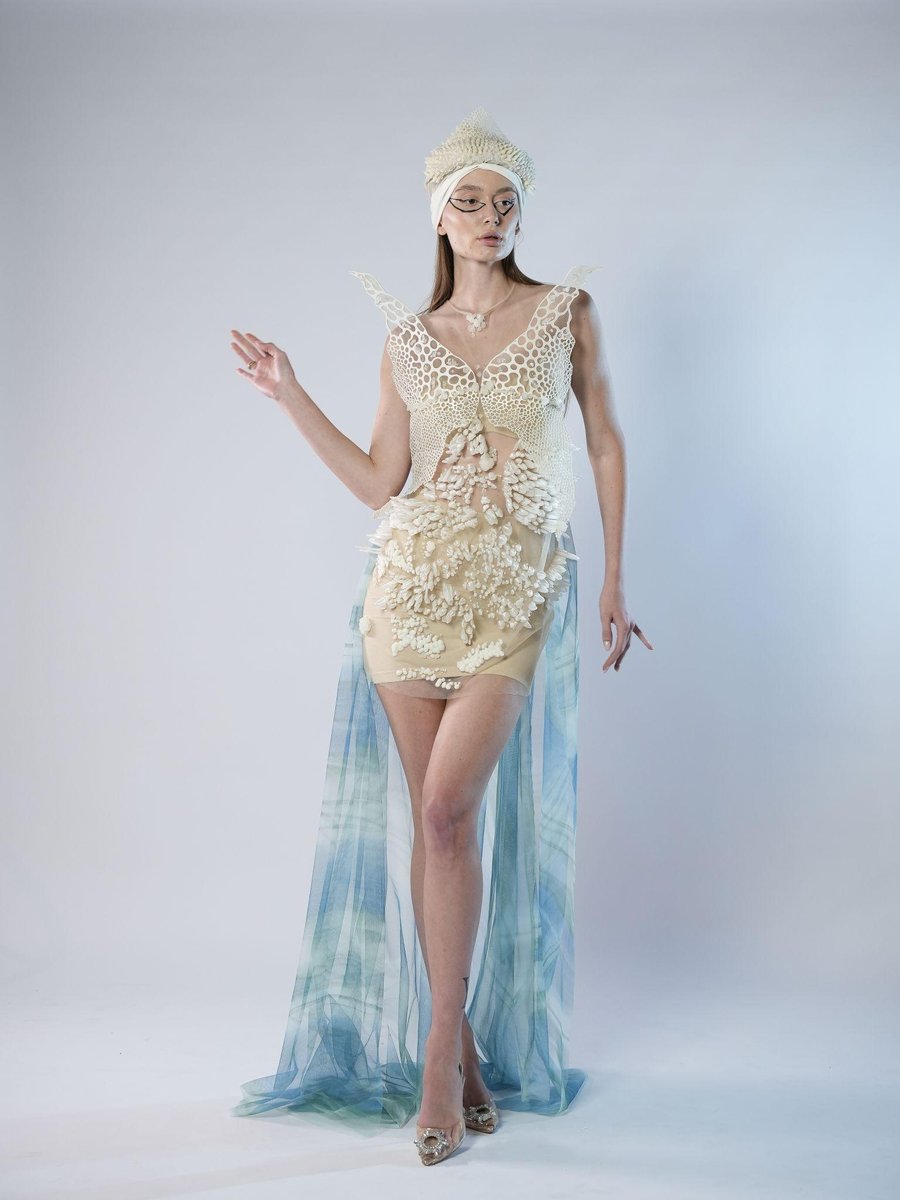
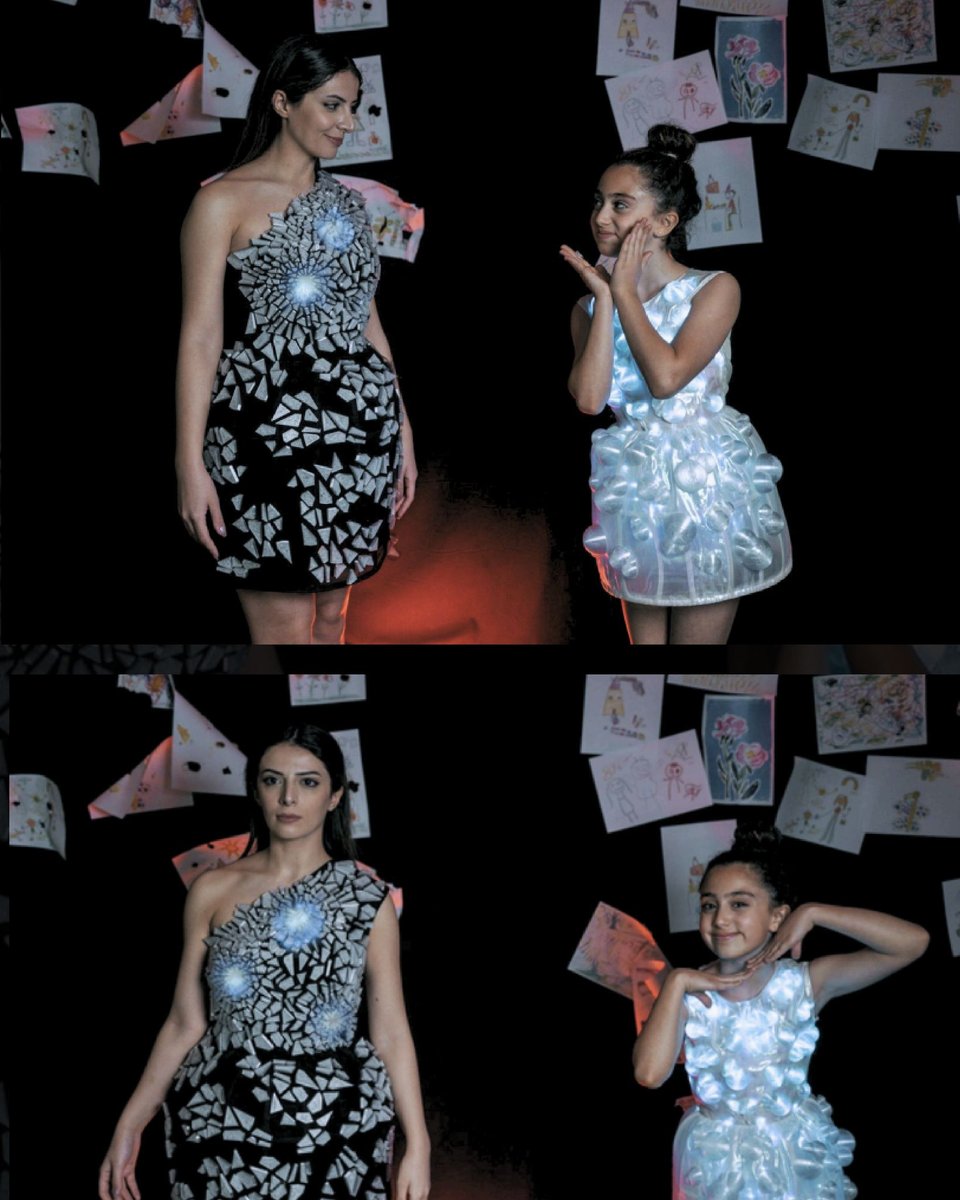
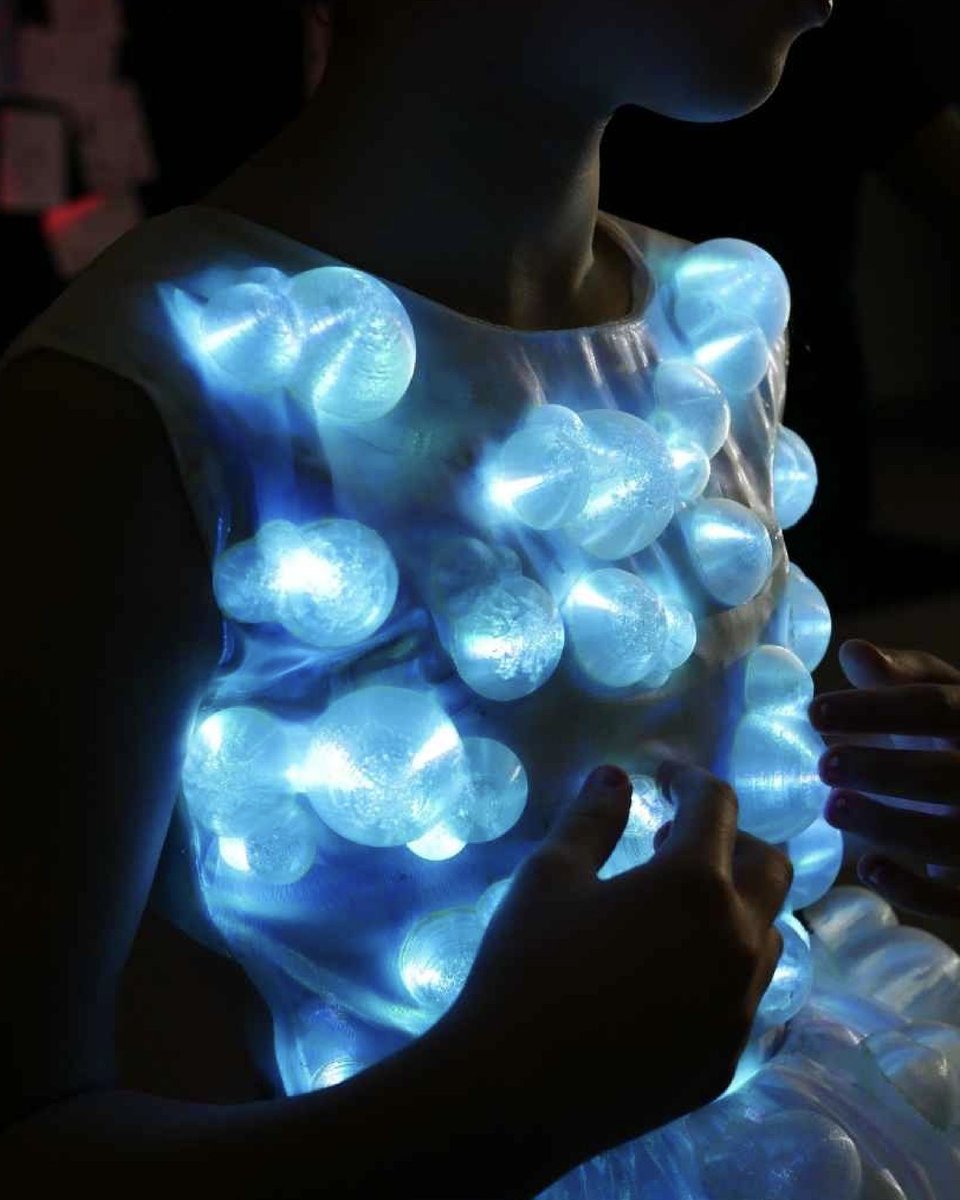
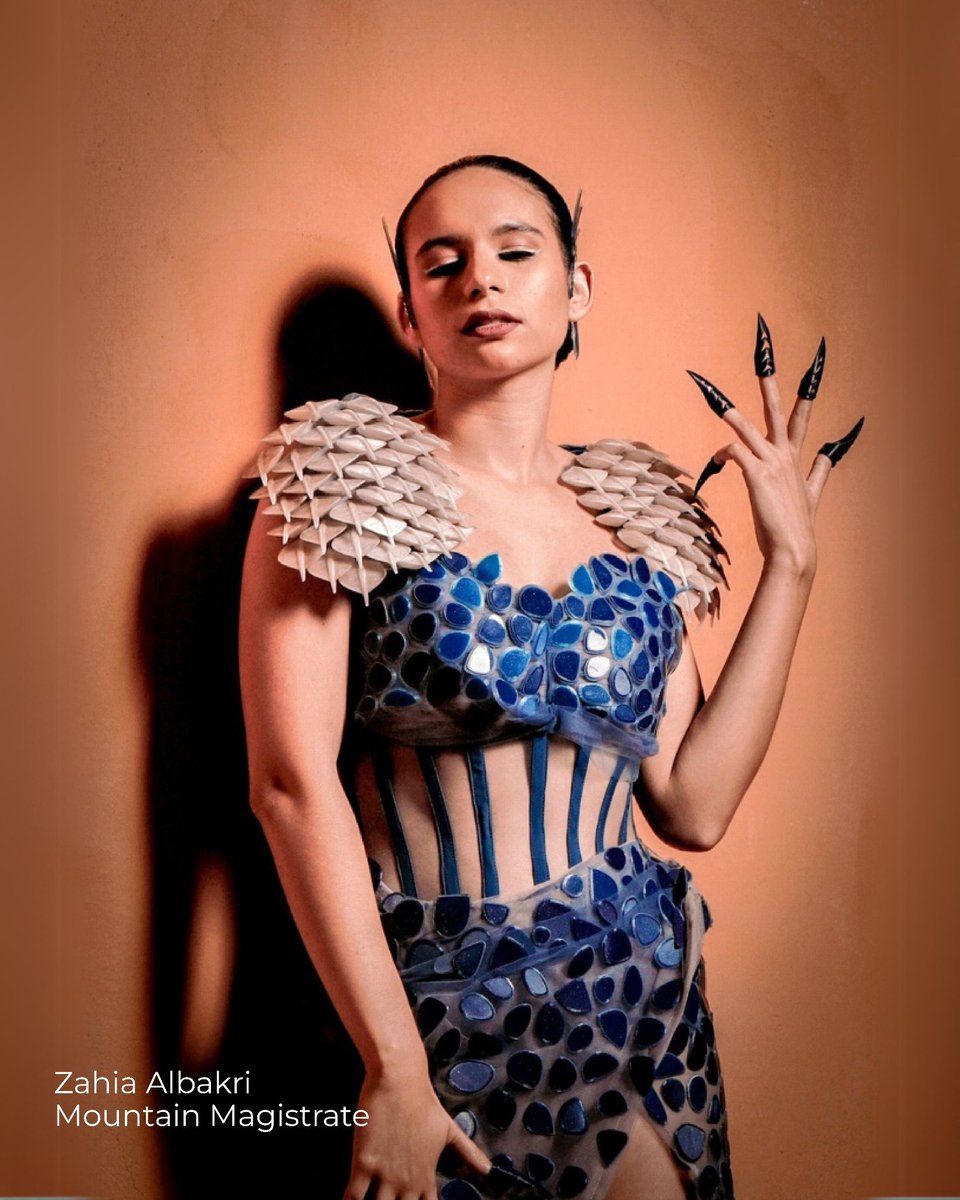
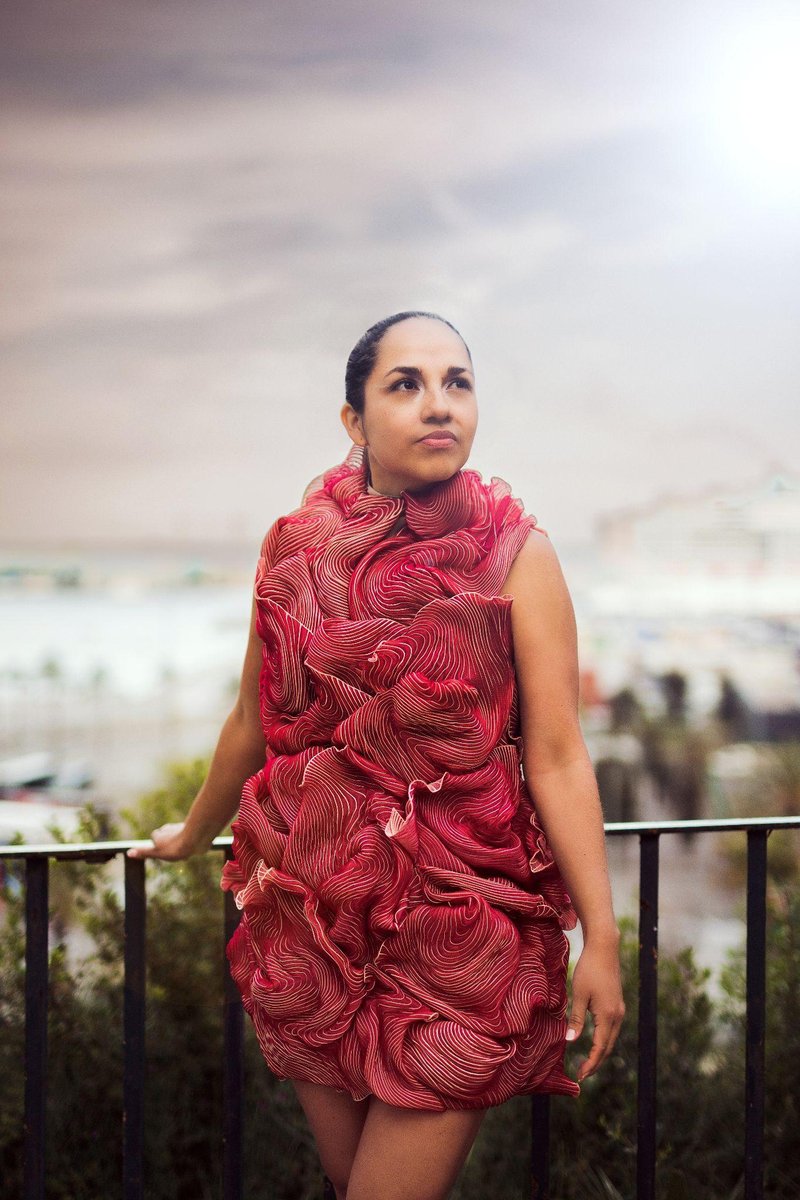
This is that list — ten works from Fabricademy students across cohorts, shown in the Week 7 Computational Couture class. Each one is a printed garment that had to survive being worn.

What the ten have in common
Nothing about the materials is shared — the group runs from stiff lattice to soft flexible filament, from pale neutrals to yellow, red and green. What they share is a decision: print for the body, not for the printer.
That shows up in three ways:
- Many small units, not one big panel. Prints are broken into pieces so the garment can still drape, fold and be put on. This is the same lesson the Moiré Drops case study counts out in hours.
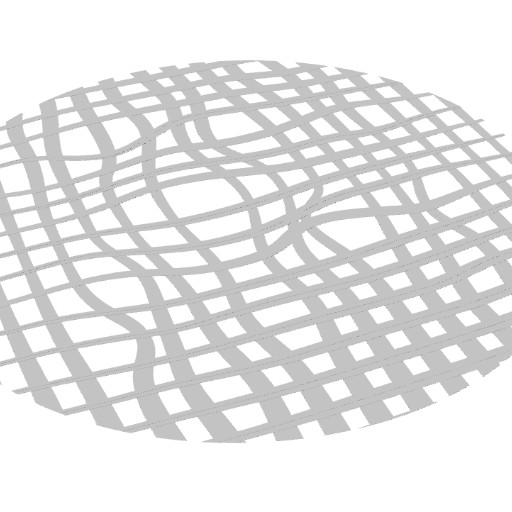
- The surface is the design. Pattern, ornament and structure come from the printed geometry itself, which is why these pieces look unlike woven textile with print applied afterwards.
- Finished garments, photographed on bodies. Every one of the ten is documented worn or dressed, which is the only way to judge whether printed cloth actually works.
Where to go next
If you are placing these ten in the wider field, start with the taxonomy of printing of, on and for textiles and the ten designers who set the direction. For the technologies behind them, see FDM, SLS and direct-to-textile.
Print your own
MetaTextiles is an open library of 3D printed fashion files. If you have printed a garment, a swatch or a structure onto cloth, upload it so the next cohort starts from your geometry instead of from zero.
Share what you make
Every design in this library is published with its printable files under a Creative Commons licence. If you have printed something — or remixed one of these ideas — add it to the catalogue so the next person can build on it.