Case study: Moiré Drops — 3D printing on organza (Fabricademy 2022–23)
Most 3D printed fashion fails on the same detail: the printed part and the cloth never really become one material. This Fabricademy final project solved it with organza, TPU and a lot of hand stitching — and, unusually, published its numbers.
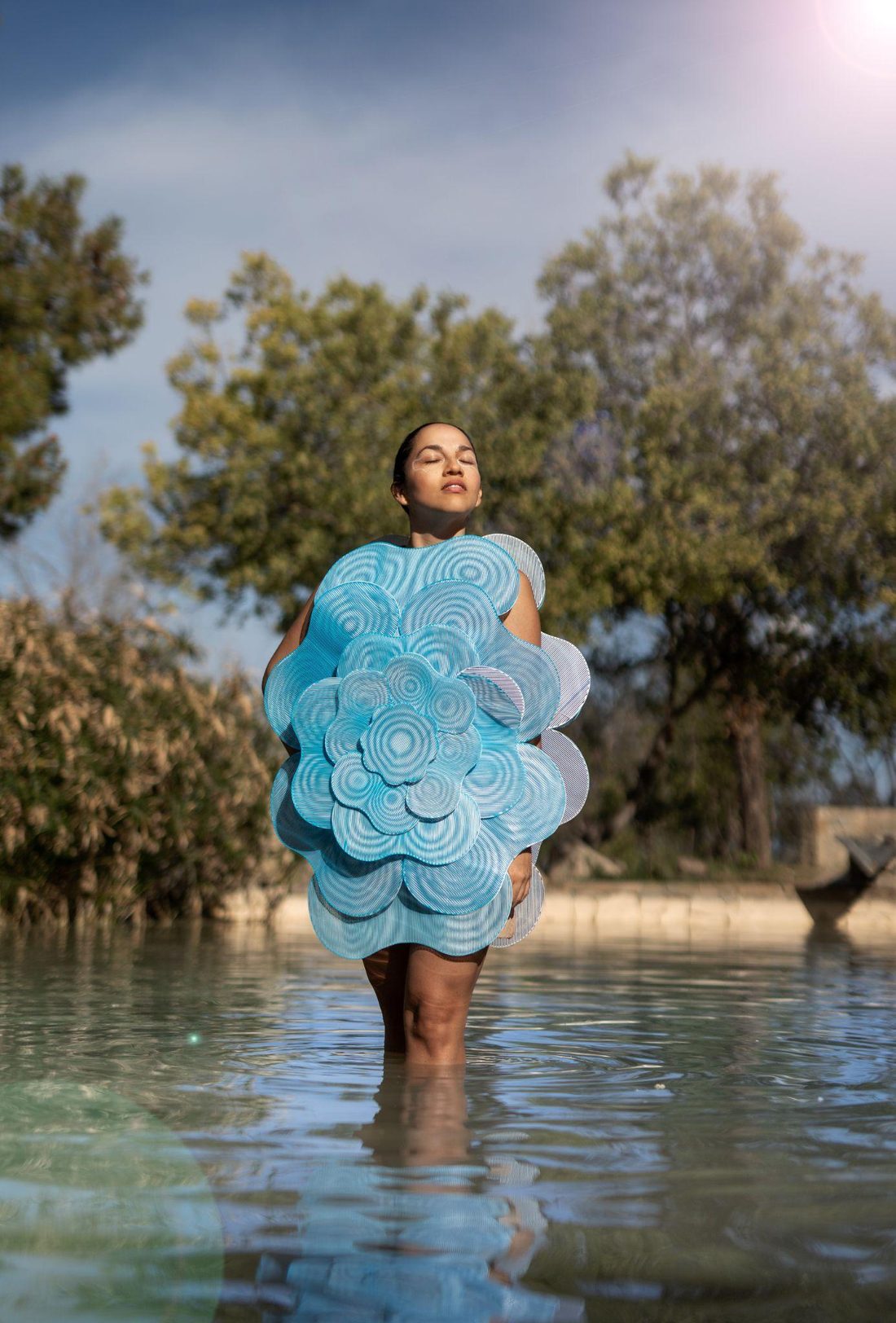
Moiré Drops
Fabric: organza, blue and white. Filaments: TPU for the white base, PLA for the blue base. Printer: AnyCubic, FDM. Pieces: 60, front and back. Printing: 18 minutes for each smaller piece, 2 hours 17 minutes for each larger one. Hand stitching: 12 hours front and back.
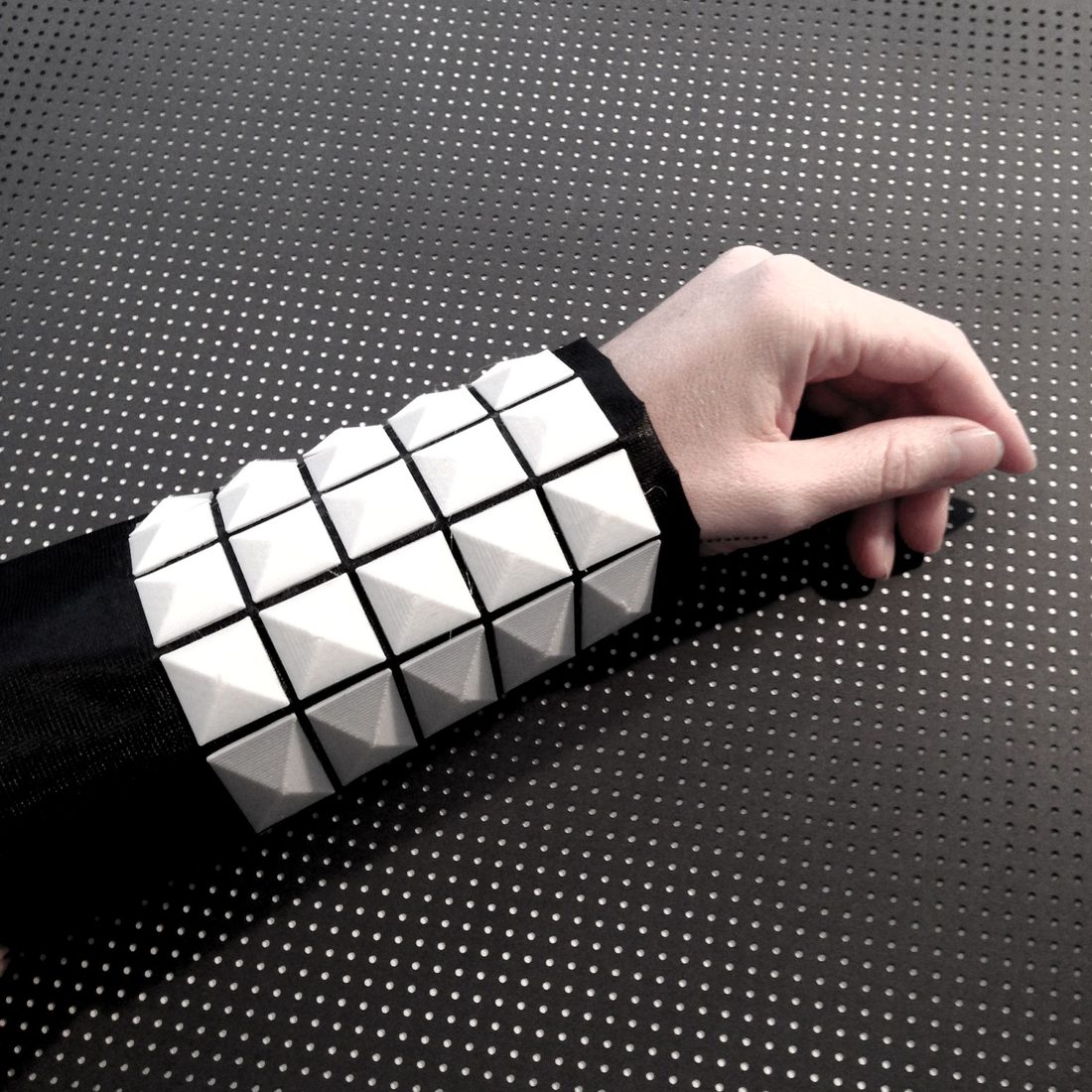
The result is a droplet-inspired look built from many small printed elements on a very light fabric, so the piece can move. Printing many small parts instead of one large panel is what keeps the organza in charge of the drape — that is the design decision worth copying.
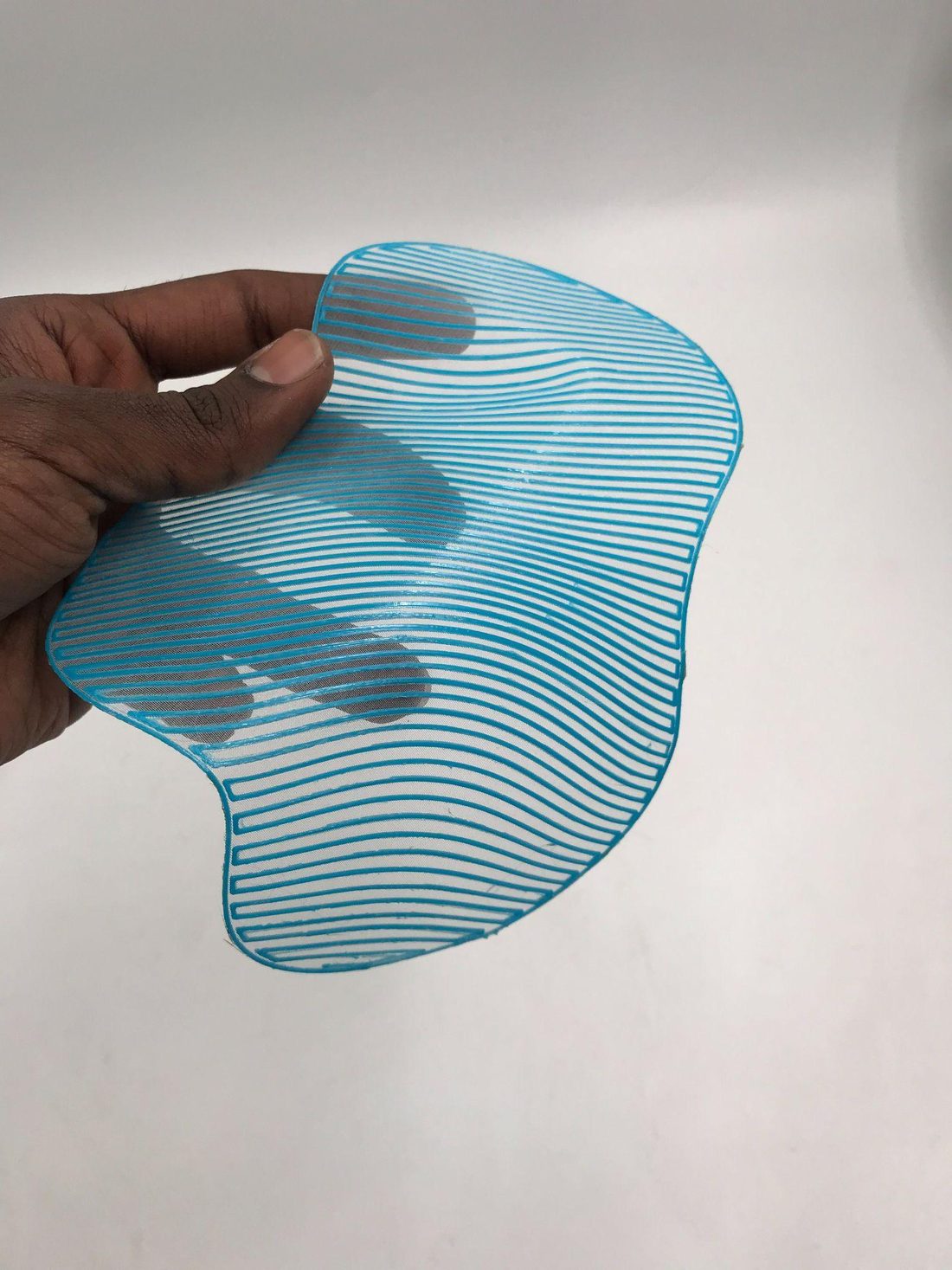
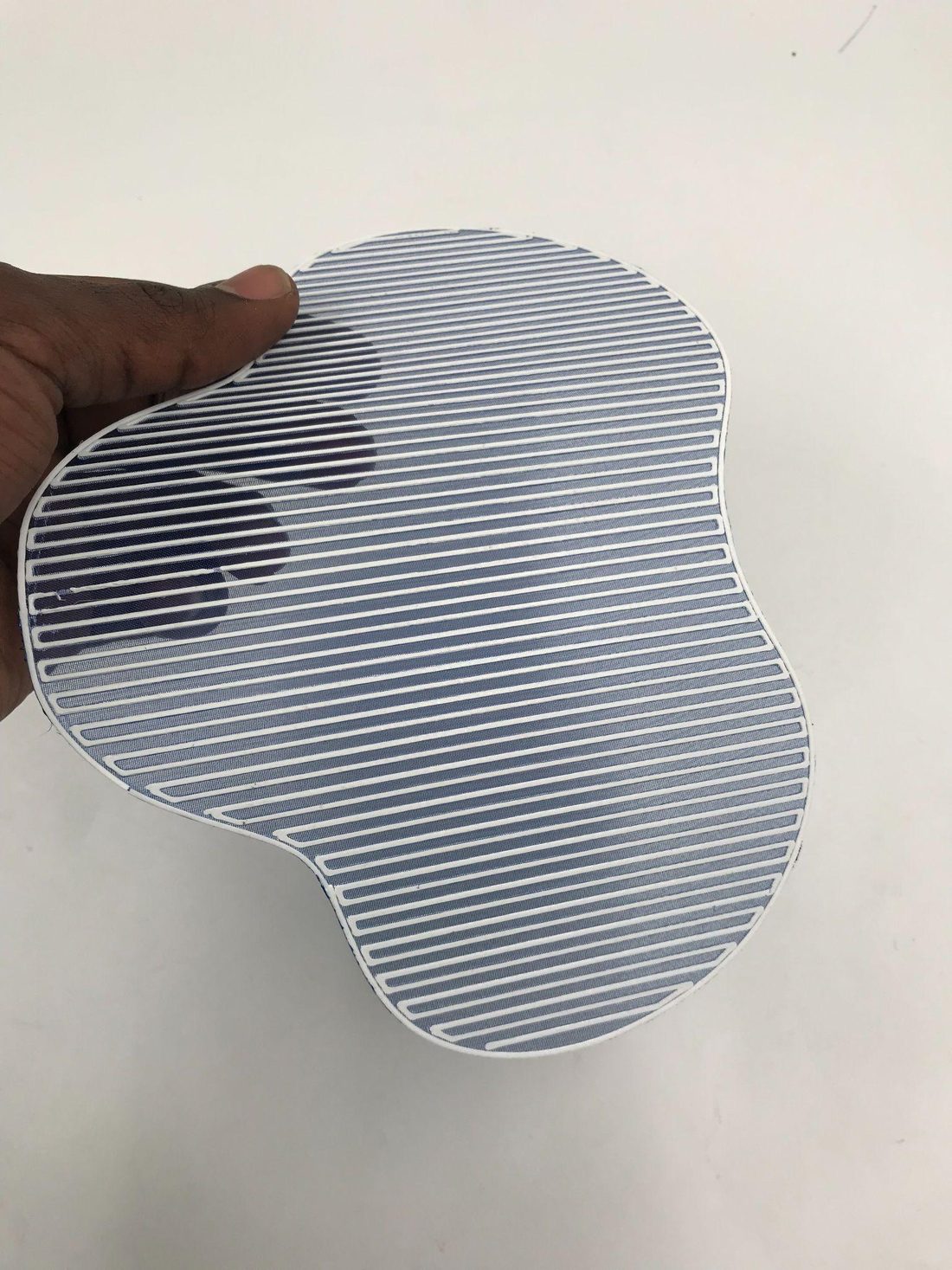
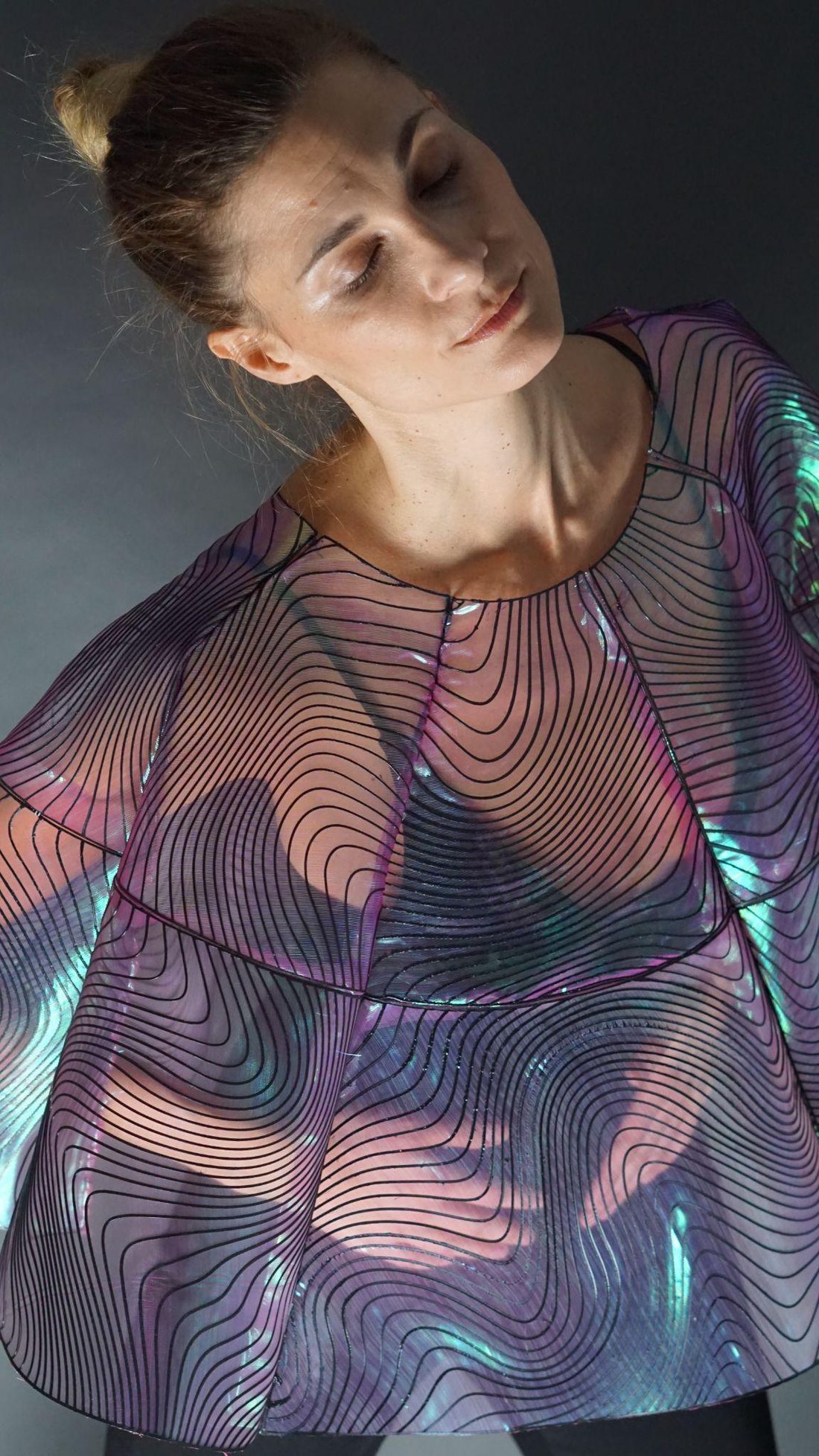
Shimoiré
Fabric: organza. Filament: TPU. Pieces: 16 front and back. Printing: 32 minutes for each piece. A second, denser geometry on the same fabric, used to compare how the printed pattern interacts with the weave when the piece is worn.
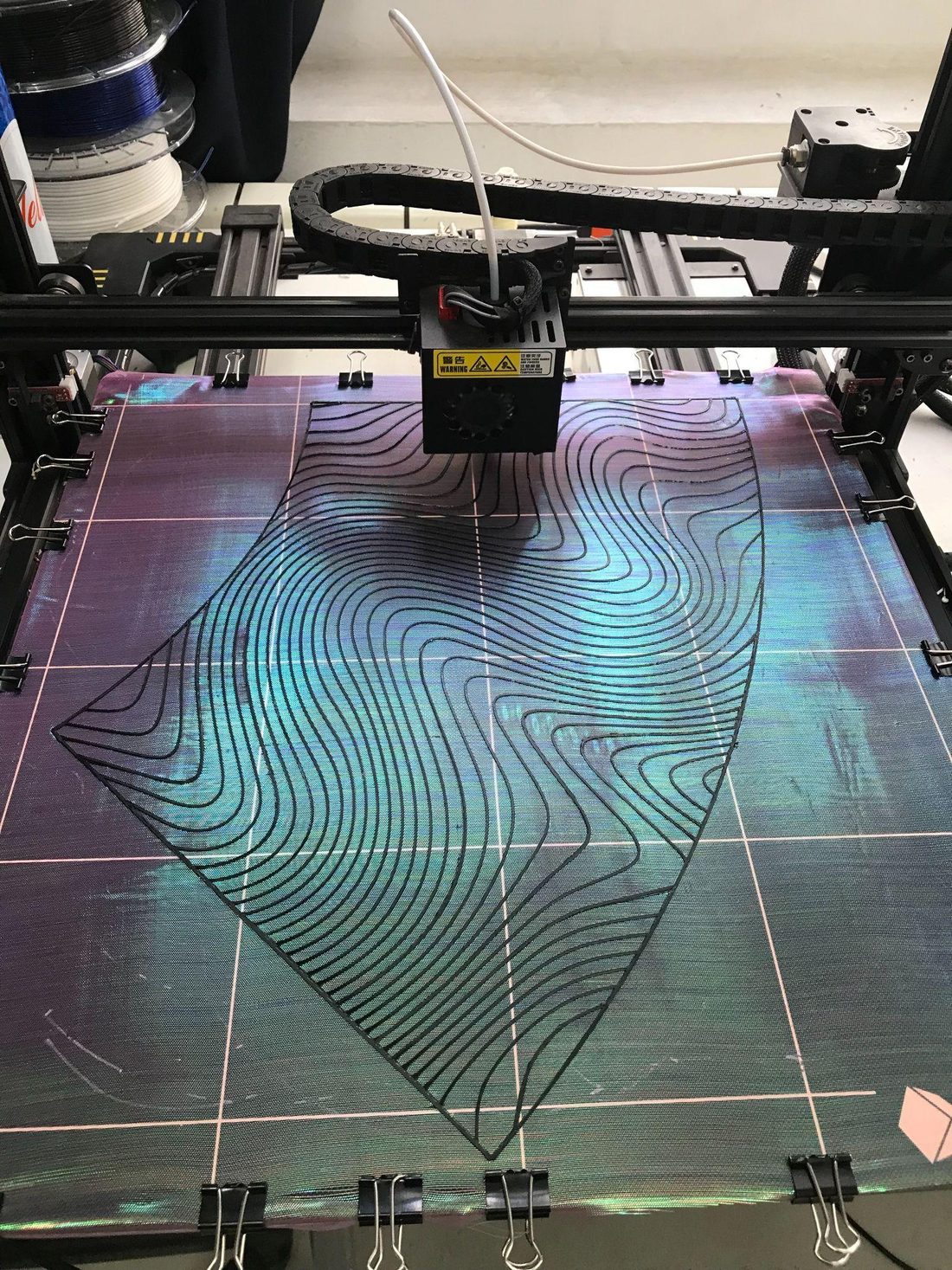
RED REEF
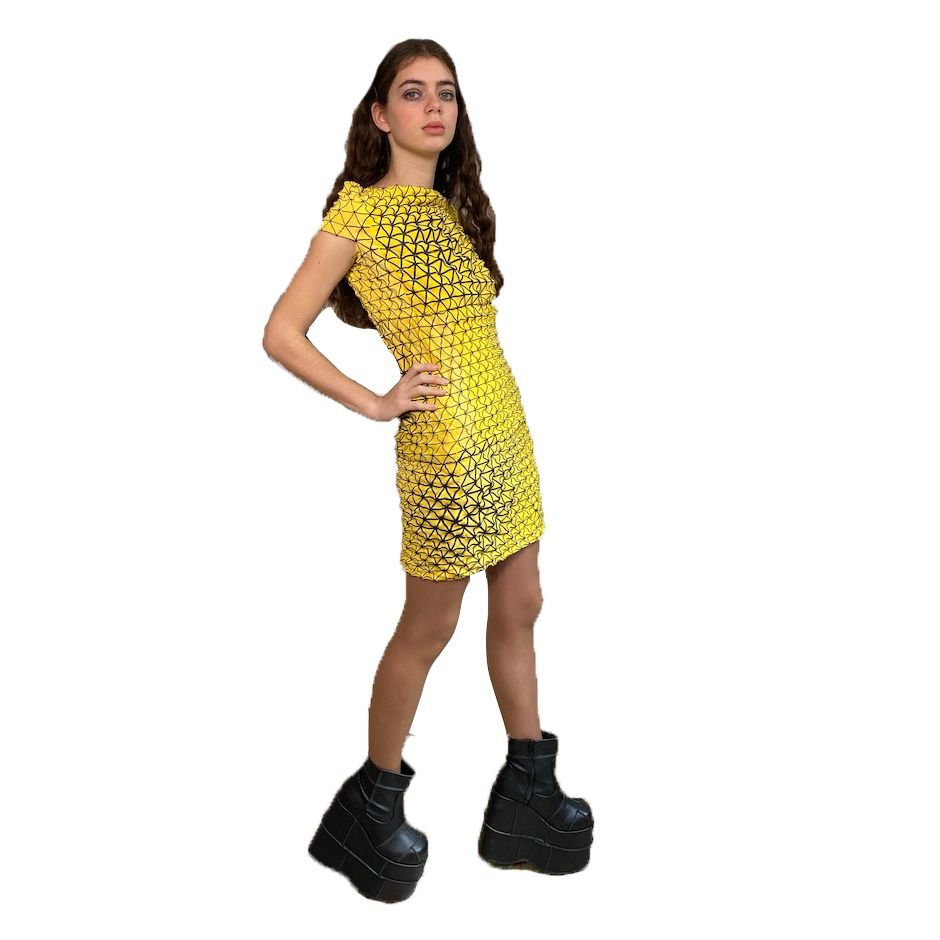
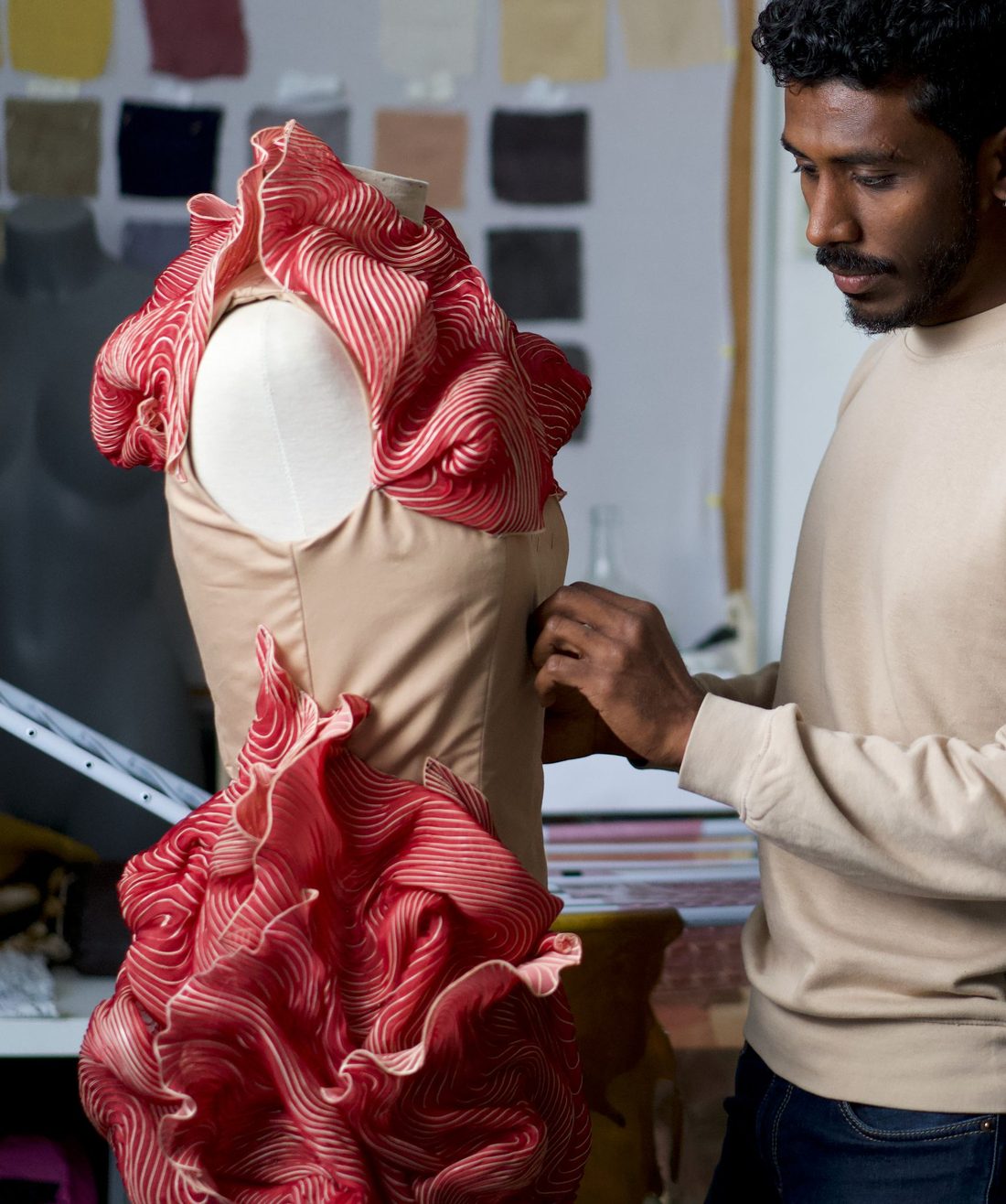
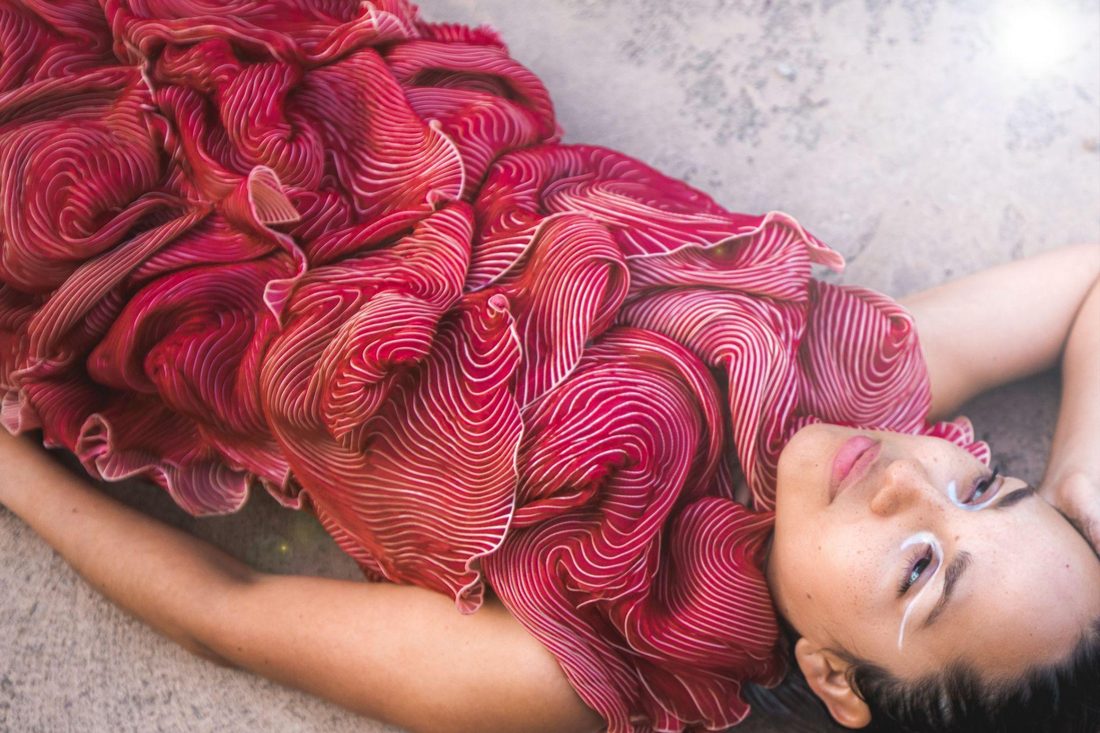
Fabric: organza and mesh. Filament: TPU. Pieces: 28 front and back. Printing: 1 hour 43 minutes. Hand stitching: 10 hours front and back.
RED REEF is where mesh shrinkage had to be designed around: a stretched mesh pulls back after printing, so the geometry has to account for the fabric returning to its own tension.
Technical development: expanded lines
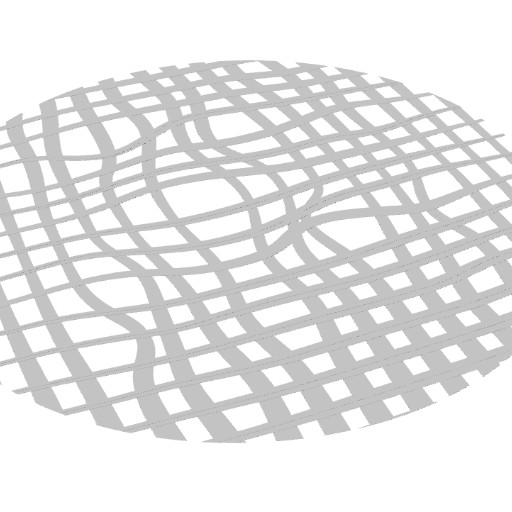
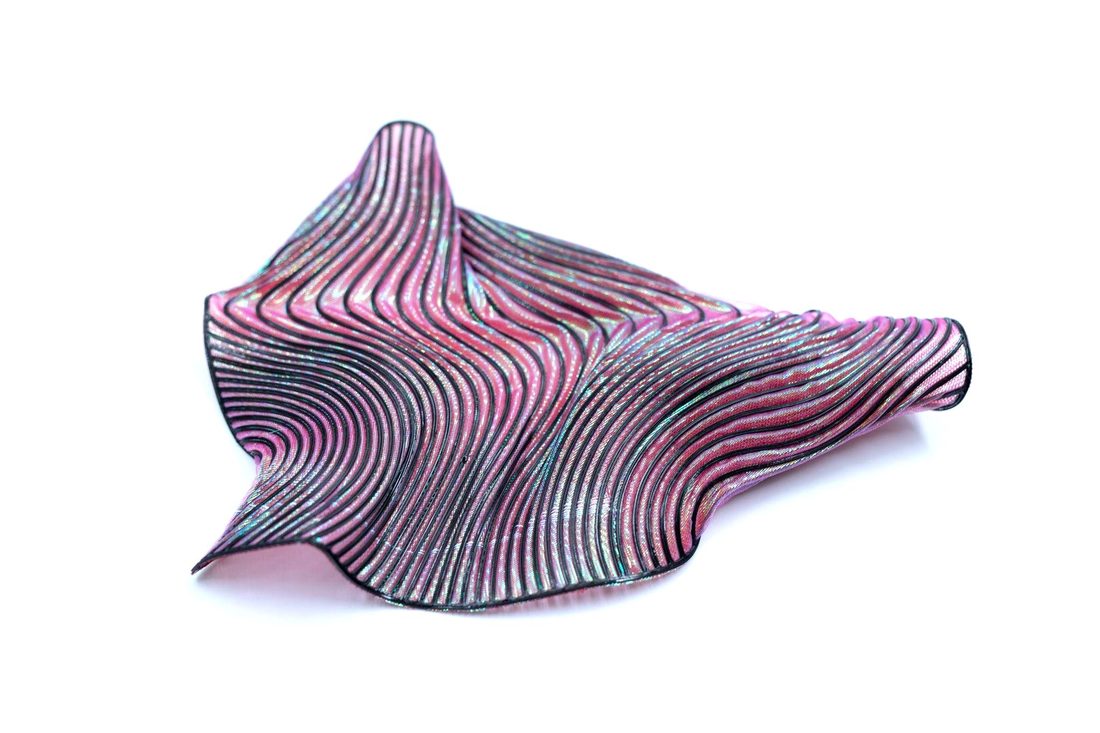
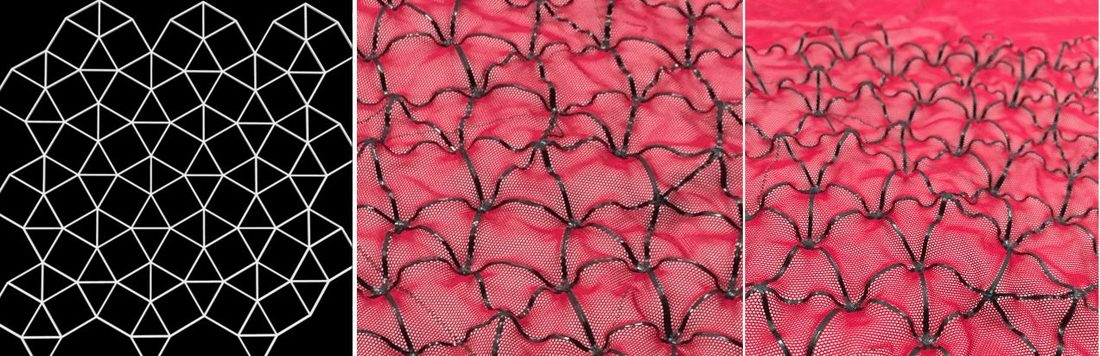
Alongside the garments, the project developed a family of test pieces — expanded lines — printing TPU onto mesh and lycra to compare how the same line geometry behaves on different substrates.
What to take from it
- Small printed elements on a light fabric give drape; large panels give armour.
- TPU on organza or mesh is a workable, low-cost combination on an FDM printer.
- Every figure here came from a real project, so it can be planned against: if the small pieces take 18 minutes and the large ones 2 hours 17, a 60-piece garment is a known quantity of machine time before you start.
- Publish the numbers. Print hours per piece and stitching hours are the most useful thing one designer can leave for the next.
Project: Dinesh Kumar, Fabricademy final project 2022–23 — Moiré Drops. Technical data and images from the Fabricademy Week 7 class "Computational Couture" by Anastasia Pistofidou.
Share what you make
Every design in this library is published with its printable files under a Creative Commons licence. If you have printed something — or remixed one of these ideas — add it to the catalogue so the next person can build on it.