The three 3D printing technologies used on textiles: FDM, SLS and direct-to-textile
Three technologies are used with textiles today, and they differ in materials, in cost, and in who can use them.
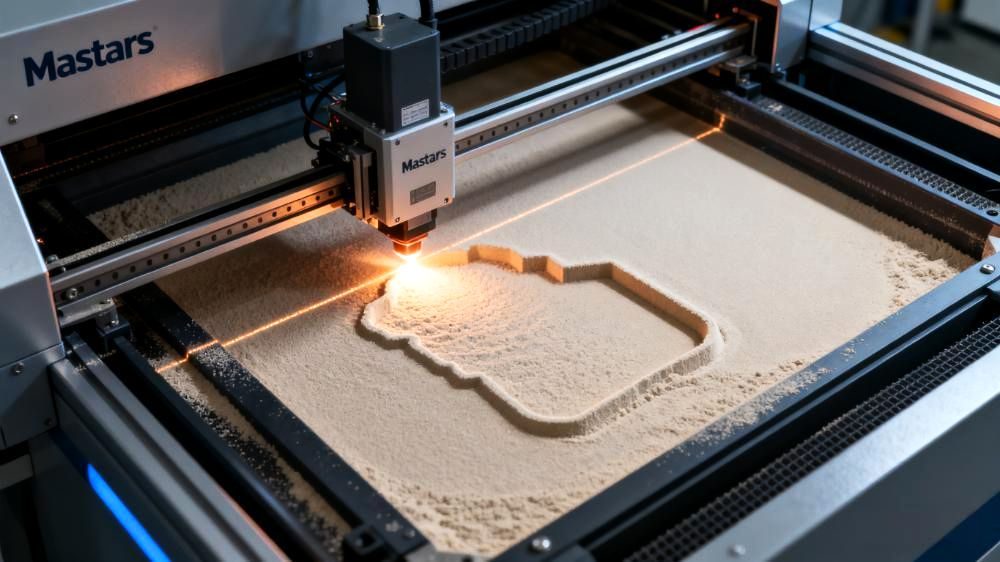
1. Fused Deposition Modeling (FDM)
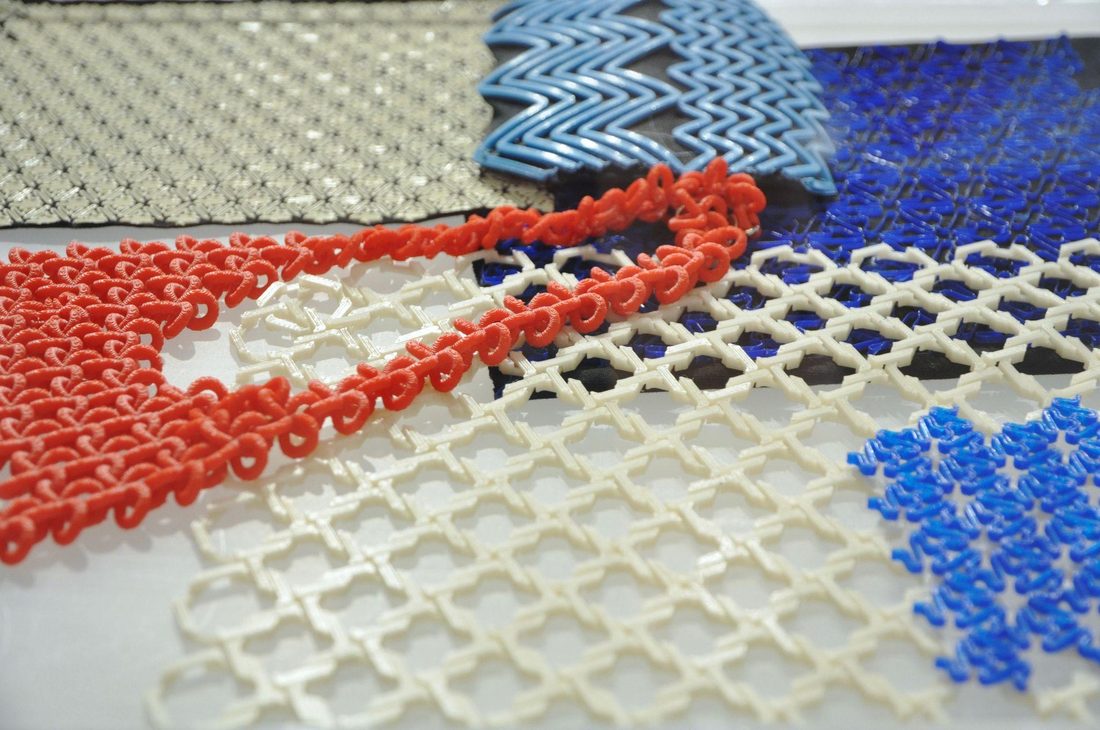
A filament is melted and extruded layer by layer. Materials: PLA, TPU and other flexible filaments. This is the technology most printed textile work starts with, because it is affordable, available in every lab, and can print directly onto a stretched fabric or through a mesh.
Its limit is resolution and speed: fine detail is slow, and the bond to cloth depends on temperature and travel more than on the machine.
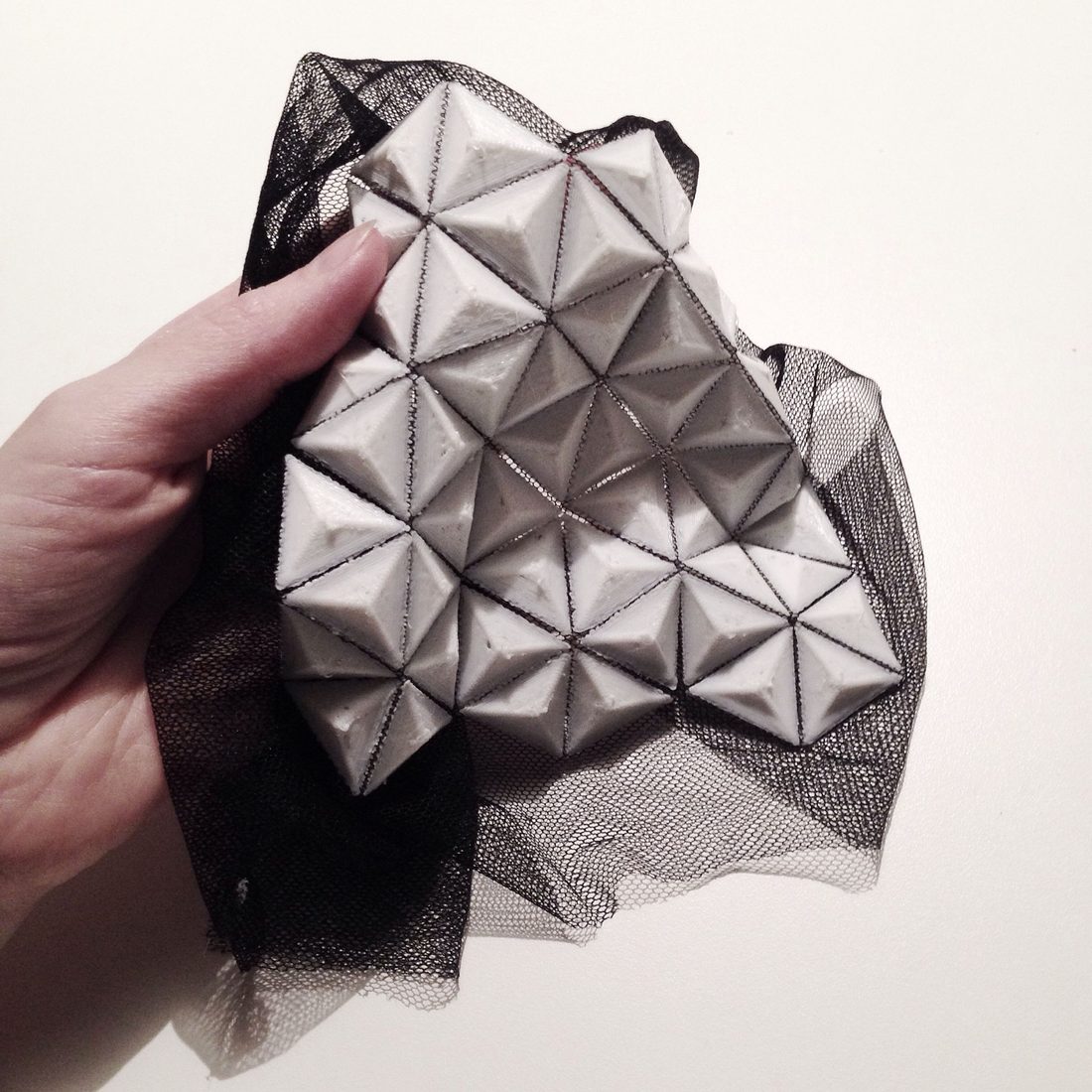

2. Selective Laser Sintering (SLS)
A laser fuses powder, usually polyamide (nylon PA12) or TPU powder. No supports to remove, no layer direction to design around, and mechanical properties much closer to a real textile — which is why print-in-place interlocking and chainmail-like structures are usually made in SLS powder.
It needs an industrial machine, so small studios normally order parts from a service bureau. Print cost scales with the volume of the whole build chamber, not with your piece alone.
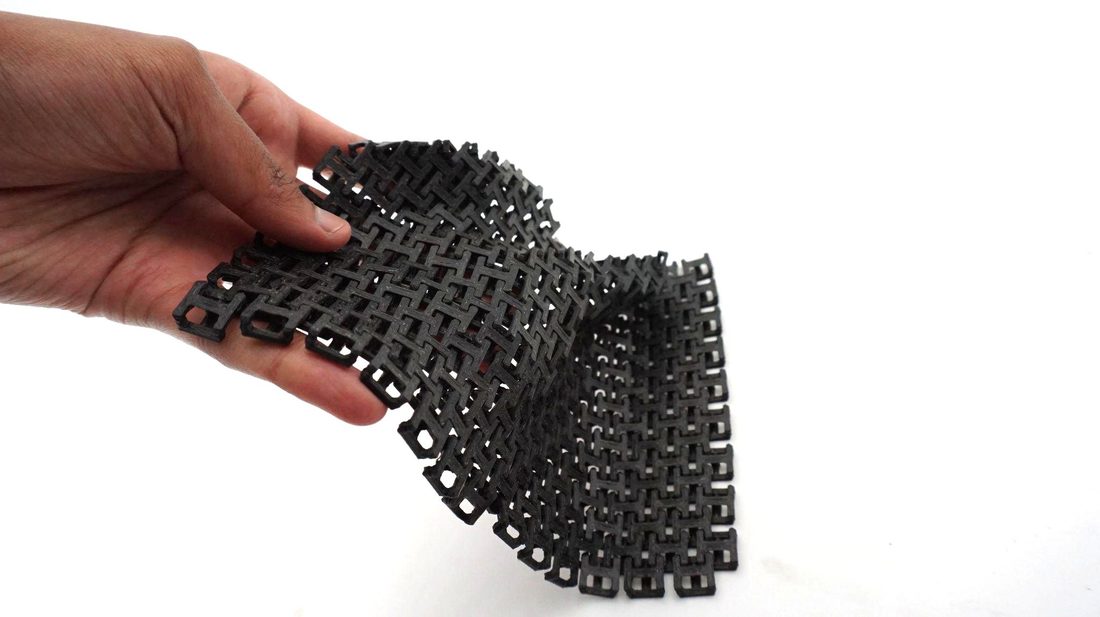
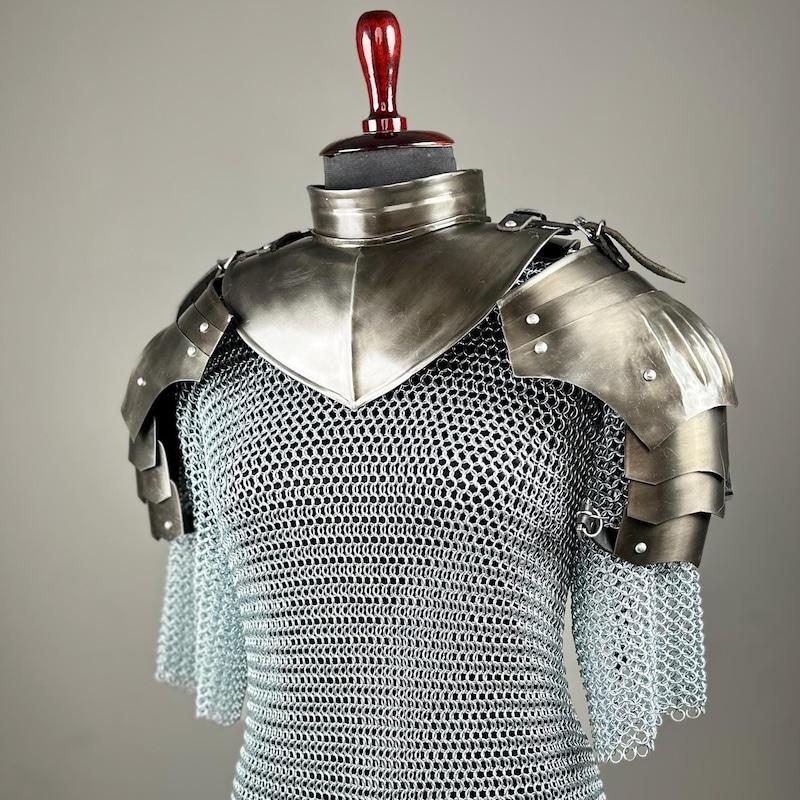
3. Direct-to-textile
A print head deposits photopolymers and elastomer resins straight onto fabric — the industrial version of printing on a textile. Stratasys' J850 TechStyle is the reference machine, and it prints multi-material, full-colour patterns with the fabric held flat and indexed through the printer.
This is where colour and precision are best, and it is the least accessible: the hardware is industrial, and the workflow assumes a production partner.
Which one for a printed textile project
| FDM | SLS | Direct-to-textile | |
|---|---|---|---|
| Materials | PLA, TPU, flexible filaments | PA12, TPU powder | Photopolymers, elastomer resins |
| Bond to fabric | printed onto or through mesh | usually printed as the textile itself | printed directly onto the textile |
| Machine access | any lab | service bureau or industrial lab | industrial partner |
| Best for | swatches, student work, garments in many small pieces | interlocking and chainmail structures, fine lattices | full-colour patterns and multi-material surfaces |
In this library, FDM work sits in 3D printing on fabric and elastomers, while SLS structures — where the print is the textile — are collected under 3D chainmail.
Compiled by Anastasia Pistofidou for the Fabricademy Week 7 class, "Computational Couture".
Share what you make
Every design in this library is published with its printable files under a Creative Commons licence. If you have printed something — or remixed one of these ideas — add it to the catalogue so the next person can build on it.